Psychological Science Research Methods. My research courses have a particular focus on selecting valid psychological outcome measures, designing clinical trials, and the studies investigating the intersection between technology and mental health. Skills taught and tested through the course include: posing testable research questions and alternative hypotheses; conducting a literature search; evaluating psychometric properties of mental health measures; best practices for designing study methods; critically evaluating internal and experimental validity; critically evaluating research ethics; interpreting statistical results output; identifying methodological limitations and limits to generalizability; and translating findings to meaningful implications and future directions. By the end of the quarter, students collaboratively design a “clinical trial” group project.
More coming soon…
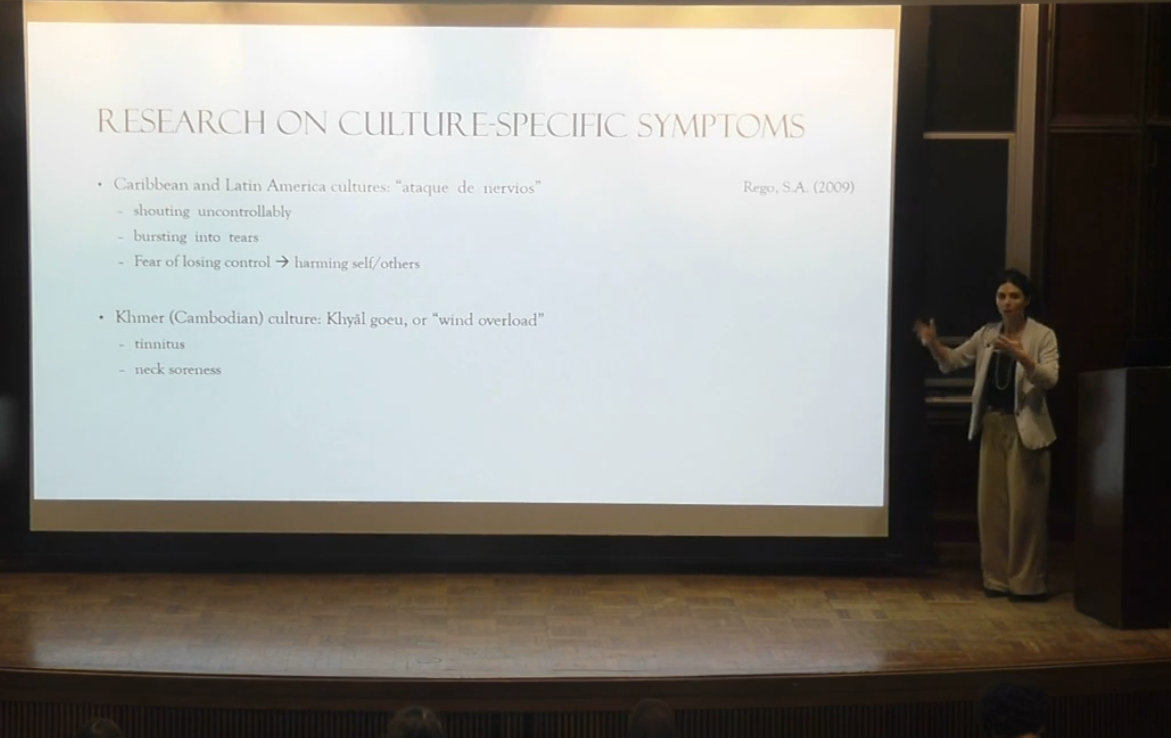
Introduction to Clinical Psychology. Course topics include diagnoses, psychotherapy, medications, risk factors, and prevalence of: mood disorders; anxiety disorders; OCD; eating disorders; neurodevelopmental disorders; disruptive and conduct disorders; substance use disorders; behavioral addictions; psychotic disorders; adjustment disorder; trauma-related disorders; dissociative disorders; neurocognitive disorders; personality disorders; and later life mental health. Students engage in critical thinking through DSM-5 diagnosis of case vignettes and partner discussions about how psychological disorders might present differently across demographics and cultures. In weekly small group discussion sections, students participate in step-by-step treatment demonstrations (e.g., CBT, motivational interviewing).